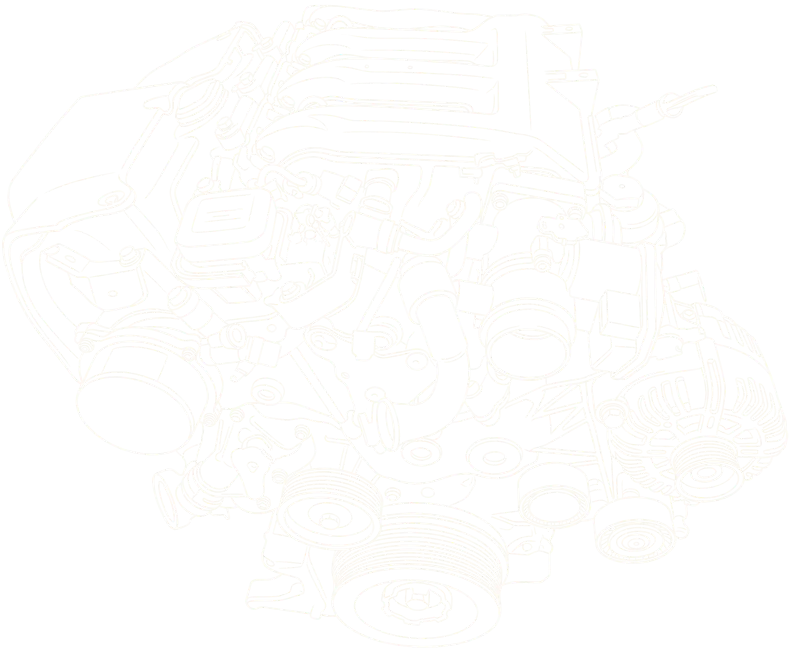
BMW/M47
BMW · Single variable-geometry turbocharger (Garrett GT1749V on M47TU2)

BMW 320d M47

320d·E46/E90·20012007·1,995 cc·Verified 13 Jul 2026

"Had mine since 2006, 280k on the clock now, still pulls strong. Only real dramas were the crank pulley shredding itself around 120k and getting the swirl flaps blanked before they let go and took a piston with them."

SOLID
61/ 100
"Swirl flap ingestion risk and pulley wear, but a proven high-mileage block"
Compare

Power Variants

150 hp · 330 Nm
M47TU
2001-2004
Original common-rail version introduced September 2001, first fitted to the E46 320d and 120d. Uses the earlier, weaker swirl flap spindle design.
163 hp · 340 Nm
M47TU2
2004-2007
Revised variable-geometry turbo and injection tune, fitted to E46/E90 320d and E87 120d. The version this card's headline specs describe. Cars built from 2006 onward get BMW's stronger swirl flap spindle design regardless of tune.

Recommendation

Don't choose between the 150hp and 163hp M47 based on power alone, the meaningful difference is the swirl flap spindle revision, not the tune. BMW moved to a stronger, larger-diameter plastic spindle from 2006, which spans the tail end of both the M47TU and M47TU2 production. Ask for the engine build date rather than relying on the model year or advertised hp, and check whether the flaps have already been removed or blanked. A 150hp car with documented swirl flap work and a healthy pulley is a safer buy than a 163hp car with no history.

163
Max HP
340
Torque Nm
10,000
Oil interval km
0
Recalls
7
Known issues

Known Issues

Swirl Flap Failure / Ingestion€300-1,200 (preventive removal); catastrophic if ingested · 100,000-200,000 kmCRITICAL

The M47TU introduced swirl flaps in the intake manifold, small butterfly valves secured to an actuating rod by screws. The screws can work loose from vibration and be drawn into the cylinder, causing damage to the piston, cylinder head, valves, and sometimes the turbo. This is well documented across BMW specialist publications and forums, to the point that an aftermarket industry exists purely around removing or blanking the flaps preventively. BMW fitted stronger flaps and larger-diameter plastic spindles from 2006 onward.

Rattling from intake manifold area
Rough running or misfire
Sudden loss of power
Catastrophic internal engine noise if ingested
DIY: Moderate for preventive blanking; expert only if ingestion damage has occurred
Crankshaft Pulley / Harmonic Balancer Failure€150-450 · 100,000-200,000 kmHIGH

The crankshaft pulley is a well-known M47 weak point. The rubber decoupler ring bonding the inner and outer pulley sections degrades over time and can fail suddenly, sometimes at a stop light, occasionally shredding the pulley entirely and throwing the serpentine belt.

Battery not charging warning
Serpentine belt thrown
Visible wobble in pulley
Rattling from front of engine
DIY: Moderate
Water Pump Failure€300-700 · 100,000-160,000 kmHIGH

Water pump bearing and weep hole failures are repeatedly reported on the M47. Running with low coolant accelerates bearing wear. Commonly replaced alongside the timing belt since the access largely overlaps.

Overheating warning
Coolant loss
Rattling from front of engine
Fan noise surge
DIY: Moderate
EGR Cooler Cracking / Leaking€400-1,200 · 80,000-180,000 kmMODERATE

EGR cooler cracking, typically at the lower accordion section or upper 90-degree bend, causes coolant leaks and potential coolant ingestion into the intake. This is a genuine wear item reported by owners, not a recall matter. Every EGR cooler recall BMW has issued (2018 onward) names the later N47/N57/B47 engines, not the M47, so treat this as routine wear rather than a safety campaign.

White smoke from exhaust
Coolant loss without visible external leak
Sweet smell from intake or exhaust
Overheating
DIY: Hard
EGR Valve Malfunction / Carbon Buildup€200-600 · 80,000-150,000 kmMODERATE

EGR valve sticking or failing due to carbon fouling causes rough running, reduced power, and increased smoke. This is a generic EGR-diesel wear pattern rather than an M47-specific design flaw.

Rough idle
Black smoke under load
Reduced power
EGR-related fault codes
DIY: Moderate
Blow-by / Oil Consumption€200-800 · 150,000-220,000 kmLOW

Higher-mileage units can show meaningful oil consumption, sometimes combined with valve cover gasket seepage.

Blue smoke at startup or under load
Oil level dropping between services
Oil residue around valve cover
DIY: Easy
Valve Cover Gasket Oil Leak€80-250 · 80,000-150,000 kmLOW

Valve cover gasket seepage is a common minor issue on the M47. Oil burns off on hot engine surfaces, producing a burning smell rather than a visible puddle.

Burning oil smell
Oil residue on top of engine
Slight smoke from engine bay
DIY: Easy
Advertisement

Buying Checklist

Inspect the swirl flap area for looseness or missing blanking; ask whether flaps have been removed or blanked preventively
Check service history for timing belt and water pump replacement; if undocumented, budget for immediate replacement since this is an interference engine
Inspect the crankshaft pulley at idle for visible wobble and check the rubber decoupler ring for cracking
Pressure-test the cooling system and inspect the EGR cooler for coolant weeping
Scan with OBD diagnostics for EGR, boost, and coolant temperature fault codes before purchase
Check oil level and condition; milky or frothy oil indicates possible coolant contamination
Ask for the engine build date, not just the registration date, cars built from 2006 onward have the revised, sturdier swirl flap design

Service Reality

Community oil interval10,000 km
Oil specificationBMW Longlife-98 5W-30 fully synthetic for pre-DPF cars (2001-2004); BMW Longlife-04 5W-30 for later DPF-equipped examples (roughly 2005-2007)
Est. ownership cost (2yr)€1,800-5,400 over 3 years depending on mileage, service history, and whether swirl flap, pulley, and timing belt work has already been done
Real mix fuel consumption5.6 L/100km

Strong Points

Proven diesel architecture with a long production run from 1998 to 2007
Common-rail injection from September 2001 (M47TU) onward improved refinement over the original M47D20
340 Nm torque on the top M47TU2 tune gives strong real-world pulling power for a 2.0L diesel of this era
Large, mature community with well-documented DIY repair guides given huge production volume
Good parts availability given widespread fitment across BMW, Rover, MG, and Land Rover platforms
Core block is genuinely capable of high mileage, 300,000+ km and sometimes 400,000+ km, when maintained properly

Also Found In

BMW 318d E46BMW 318d E90BMW 320d E46BMW 118d/120d E87BMW 520d E39/E60BMW X3 20d E83Rover 75 2.0 CDT/CDTiMG ZT 2.0 CDT/CDTiLand Rover Freelander Td4

Time Bomb Parts Inspect Proactively

Swirl flaps (intake manifold)
Inspect or proactively remove/blank with appropriate ECU adjustment before ingestion occurs, especially on pre-2006 spindle design
100,000-200,000 km
Crankshaft pulley (harmonic balancer)
Inspect rubber decoupler ring for cracking or delamination; replace if any play detected
100,000-130,000 km
Water pump
Replace proactively at timing belt service interval
120,000 km
Timing belt kit
Replace with OEM-quality kit including tensioners and idlers; do not extend beyond recommended interval, this is an interference engine
120,000 km
EGR cooler
Inspect for coolant weeping as a routine wear check, not a recall item on this engine
80,000-180,000 km

Tuning Risk If This Example Has Been Modified

HIGH
Signs of modification
Chip tune / ECU remap (widely and commonly done on this engine; forum consensus describes going from roughly 150bhp stock to 190-200bhp as a very common 'Stage 1' remap)
EGR valve blanked or physically removed, commonly done alongside a remap
Physical removal of the intake manifold swirl flaps and fitment of blanking plates, a widely recommended preventative job regardless of whether the car is remapped
Aftermarket decat downpipe and/or custom exhaust back box
Panel or induction filter (Pipercross or similar) replacing the factory air filter
Front-mounted intercooler (FMIC) on more heavily built examples
Upgraded clutch/flywheel or engine and gearbox mounts on cars pushed meaningfully past stock power
Can this be hidden before a sale?

A chip tune on this generation of BMW diesel ECU (DDE) can generally be flashed back to a stock-reading map, so a scan showing standard power figures is not proof the car was never remapped. More importantly for this specific engine, whether the swirl flaps and EGR were physically addressed is a separate question from whether the ECU shows a tune: forum reports describe cases where a remapper told the customer the swirl flaps had been 'deleted in the ECU software' without ever physically removing the flaps themselves, leaving the customer believing they were protected when the flaps were still deteriorating in the manifold. This means neither a stock-reading scan nor a customer's own belief that 'the swirl flaps were sorted' is reliable without physical inspection of the intake manifold.

Physical checks that still work, even after a reflash
Aftermarket decat downpipe, exhaust, or induction filter still physically present despite a stock-reading ECU
EGR blanking plate visible on physical inspection of the EGR pipe or valve
Evidence of intake manifold removal (disturbed gaskets, non-factory fasteners) consistent with a swirl flap blanking job having been done, or conversely no such evidence on a car whose owner claims the flaps were addressed
Clutch judder, slipping, or driveline vibration under load inconsistent with mileage, since the clutch, dual-mass flywheel, and propshaft guibo are commonly cited as the first things to give out once power is increased
Recently replaced clutch/flywheel or engine mounts with no matching service record
Weak points if pushed
Intake manifold swirl flaps
This is the headline risk for this engine, tuning-related or not: the flap retaining shaft is described as a genuine weak point, and a broken flap or screw can be ingested into a cylinder, causing catastrophic engine damage. An EGR delete reduces the soot loading that accelerates flap wear but does not fix the underlying mechanical weak point; physical removal and blanking is the only complete fix
Any stage, including fully stock cars
Clutch, dual-mass flywheel, and propshaft guibo
Widely cited as the first driveline components to fail once power is increased via remap, with owners recommending an upgraded clutch/flywheel setup once power goes meaningfully past stock
Stage 1+ (roughly 200bhp+)
Pistons
One detailed forum build log specifically states that without modifying the under-piston oil cooling jets, pistons are at risk of melting at around 225bhp on this engine, making this a relevant consideration for cars pushed toward or past that figure
High-power builds (~225bhp+)
Turbocharger
The stock turbo is generally described as adequate up to roughly 200bhp on a remap alone; power goals beyond that are discussed in terms of a hybrid turbo upgrade rather than pushing the stock unit further
Stage 2+ / turbo upgrade
Makes these known issues worse
Swirl Flap FailureEGR Valve FailureDual-Mass Flywheel / Clutch WearTurbo Failure
Supporting mods and risk

This is discussed directly in the community: a remap on its own, without physically removing the swirl flaps, is considered incomplete and risky regardless of power level, since the flap failure mode exists independently of tuning. The sensible order described by owners is swirl flap removal and blanking, EGR attention, and a breather/PCV check as baseline work before or alongside any remap, with clutch and mount upgrades added once power goes past roughly 200bhp. A remapped car with no evidence of swirl flap work is a meaningfully riskier buy than one with documented preventative work, independent of how much power the remap itself adds.

Emissions delete risk

This engine generally predates mandatory DPF fitment, so a DPF is not typically a relevant consideration on this platform, but EGR removal/blanking is a very commonly discussed practice, often paired with a remap. A blanked or deleted EGR is illegal for road use in the UK/EU and can cause an MOT/roadworthiness emissions test failure or a visible warning light if not also handled in the ECU calibration; this may not be obvious without a proper inspection of the EGR valve and piping.

This profile reflects consensus from E46 Fanatics, E46Zone, and BimmerForums UK discussion threads and specialist diesel tuner commentary (BW Chiptune), not manufacturer-confirmed limits. Power figures for remaps vary by tuner, fuel quality, and individual engine condition. Treat any suspected tuned or previously tuned example as needing a full pre-purchase inspection, specifically including a physical check of the intake manifold and swirl flaps (not just a scan or the seller's word that they were 'sorted'), clutch/driveline condition, and EGR status, rather than relying on an OBD scan alone.

Buying Advice

The BMW M47, particularly the M47TU/M47TU2 versions fitted from September 2001, is a genuinely well-regarded, high-mileage-capable diesel. It has two well-documented, largely engine-specific weak points that matter more than the EGR cooler: the intake swirl flaps, where loose screws can be ingested and cause catastrophic damage, and the crankshaft pulley, where rubber decoupler failure can strand you at low mileage. Water pump and timing belt history matter too, given the cost of a belt failure on an interference engine. There is no official recall covering this engine for EGR cooler issues, unlike the later N47/N57/B47 family, so a hands-on inspection of the swirl flaps and pulley matters far more than any recall check. With documented timing belt and water pump service, verified swirl flap condition (removed, blanked, or confirmed post-2006 design), and a healthy cooling system, a well-maintained M47 is a rewarding and genuinely economical diesel to own.

Community Sentiment

Mixed to positive on well-maintained, documented examples. The M47/M47TU has a reputation among independent BMW specialists as one of the more fundamentally sound diesel blocks of its era, with concerns centring on swirl flaps, crankshaft pulley, and cooling-system wear items rather than a single catastrophic design flaw on the scale of the later N47's timing chain.

Frequently Asked Questions

// 18 logged
How reliable is the BMW 320d M47?

The BMW 320d M47 has a reliability score of 61/100, rated "SOLID". Swirl flap ingestion risk and pulley wear, but a proven high-mileage block

What are the common problems with the M47?

The most frequently reported issues are Swirl Flap Failure / Ingestion, Crankshaft Pulley / Harmonic Balancer Failure, Water Pump Failure, EGR Cooler Cracking / Leaking, among others. See the Known Issues section above for symptoms, affected mileage, and repair costs.

Does the M47 have swirl flap failure / ingestion problems?

Yes, this is a documented issue on the M47, typically appearing around 100,000-200,000 km. The M47TU introduced swirl flaps in the intake manifold, small butterfly valves secured to an actuating rod by screws. The screws can work loose from vibration and be drawn into the cylinder, causing damage to the piston, cylinder head, valves, and sometimes the turbo. This is well documented across BMW specialist publications and forums, to the point that an aftermarket industry exists purely around removing or blanking the flaps preventively. BMW fitted stronger flaps and larger-diameter plastic spindles from 2006 onward. Typical repair cost: €300-1,200 (preventive removal); catastrophic if ingested. DIY difficulty: Moderate for preventive blanking; expert only if ingestion damage has occurred.

Does the M47 have crankshaft pulley / harmonic balancer failure problems?

Yes, this is a documented issue on the M47, typically appearing around 100,000-200,000 km. The crankshaft pulley is a well-known M47 weak point. The rubber decoupler ring bonding the inner and outer pulley sections degrades over time and can fail suddenly, sometimes at a stop light, occasionally shredding the pulley entirely and throwing the serpentine belt. Typical repair cost: €150-450. DIY difficulty: Moderate.

Does the M47 have water pump failure problems?

Yes, this is a documented issue on the M47, typically appearing around 100,000-160,000 km. Water pump bearing and weep hole failures are repeatedly reported on the M47. Running with low coolant accelerates bearing wear. Commonly replaced alongside the timing belt since the access largely overlaps. Typical repair cost: €300-700. DIY difficulty: Moderate.

Does the M47 have egr cooler cracking / leaking problems?

Yes, this is a documented issue on the M47, typically appearing around 80,000-180,000 km. EGR cooler cracking, typically at the lower accordion section or upper 90-degree bend, causes coolant leaks and potential coolant ingestion into the intake. This is a genuine wear item reported by owners, not a recall matter. Every EGR cooler recall BMW has issued (2018 onward) names the later N47/N57/B47 engines, not the M47, so treat this as routine wear rather than a safety campaign. Typical repair cost: €400-1,200. DIY difficulty: Hard.

Does the M47 have egr valve malfunction / carbon buildup problems?

Yes, this is a documented issue on the M47, typically appearing around 80,000-150,000 km. EGR valve sticking or failing due to carbon fouling causes rough running, reduced power, and increased smoke. This is a generic EGR-diesel wear pattern rather than an M47-specific design flaw. Typical repair cost: €200-600. DIY difficulty: Moderate.

Does the M47 have blow-by / oil consumption problems?

Yes, this is a documented issue on the M47, typically appearing around 150,000-220,000 km. Higher-mileage units can show meaningful oil consumption, sometimes combined with valve cover gasket seepage. Typical repair cost: €200-800. DIY difficulty: Easy.

Is the M47 worth buying used?

The BMW M47, particularly the M47TU/M47TU2 versions fitted from September 2001, is a genuinely well-regarded, high-mileage-capable diesel. It has two well-documented, largely engine-specific weak points that matter more than the EGR cooler: the intake swirl flaps, where loose screws can be ingested and cause catastrophic damage, and the crankshaft pulley, where rubber decoupler failure can strand you at low mileage. Water pump and timing belt history matter too, given the cost of a belt failure on an interference engine. There is no official recall covering this engine for EGR cooler issues, unlike the later N47/N57/B47 family, so a hands-on inspection of the swirl flaps and pulley matters far more than any recall check. With documented timing belt and water pump service, verified swirl flap condition (removed, blanked, or confirmed post-2006 design), and a healthy cooling system, a well-maintained M47 is a rewarding and genuinely economical diesel to own.

Should I buy a BMW 320d with the M47 engine?

Don't choose between the 150hp and 163hp M47 based on power alone, the meaningful difference is the swirl flap spindle revision, not the tune. BMW moved to a stronger, larger-diameter plastic spindle from 2006, which spans the tail end of both the M47TU and M47TU2 production. Ask for the engine build date rather than relying on the model year or advertised hp, and check whether the flaps have already been removed or blanked. A 150hp car with documented swirl flap work and a healthy pulley is a safer buy than a 163hp car with no history.

What should I check before buying a used M47?

Before buying, check: Inspect the swirl flap area for looseness or missing blanking; ask whether flaps have been removed or blanked preventively; Check service history for timing belt and water pump replacement; if undocumented, budget for immediate replacement since this is an interference engine; Inspect the crankshaft pulley at idle for visible wobble and check the rubber decoupler ring for cracking; Pressure-test the cooling system and inspect the EGR cooler for coolant weeping; Scan with OBD diagnostics for EGR, boost, and coolant temperature fault codes before purchase.

How many km will a M47 last?

There's no fixed mileage limit, it depends on maintenance. The parts worth budgeting for proactively are: Swirl flaps (intake manifold) (100,000-200,000 km), Crankshaft pulley (harmonic balancer) (100,000-130,000 km), Water pump (120,000 km), Timing belt kit (120,000 km). Engines that clear these checkpoints with documented maintenance commonly continue well beyond typical ownership periods.

How much does it cost to maintain a M47?

Estimated ownership cost is €1,800-5,400 over 3 years depending on mileage, service history, and whether swirl flap, pulley, and timing belt work has already been done, based on known issues and typical service needs.

What is the real-world fuel consumption of the M47?

Owners report real-world fuel consumption of around 5.6 L/100km, compared to the official figure of 5.5 L/100km.

What oil should I use in a M47, and how often?

Community-reported real-world usage suggests changing oil every 10,000 km using BMW Longlife-98 5W-30 fully synthetic for pre-DPF cars (2001-2004); BMW Longlife-04 5W-30 for later DPF-equipped examples (roughly 2005-2007), often more conservative than the official service schedule.

Is it safe to tune or remap the M47?

The M47 is commonly modified, with a high risk level when pushed beyond stock. Typical weak points under tuning: Intake manifold swirl flaps, Clutch, dual-mass flywheel, and propshaft guibo, Pistons, Turbocharger. Emissions-delete modification is a known risk area on this engine.

What other cars use the M47 engine?

The M47 is also found in: BMW 318d E46, BMW 318d E90, BMW 320d E46, BMW 118d/120d E87, BMW 520d E39/E60, BMW X3 20d E83, Rover 75 2.0 CDT/CDTi, MG ZT 2.0 CDT/CDTi, Land Rover Freelander Td4.

What do owners say about the M47?

Mixed to positive on well-maintained, documented examples. The M47/M47TU has a reputation among independent BMW specialists as one of the more fundamentally sound diesel blocks of its era, with concerns centring on swirl flaps, crankshaft pulley, and cooling-system wear items rather than a single catastrophic design flaw on the scale of the later N47's timing chain.

Advertisement